


31 March 2026
How NHS Healthcare Uniforms support professional identity
Professional identity in healthcare is the sense of credibility, belonging, and purpose that staff carry into every patient interaction. It shapes how staff feel about their role and how patients respond to them. This is built, in part, through what people wear.
NHS Healthcare Uniforms carry three distinct responsibilities in that process. They give patients and colleagues an instant read on who they're dealing with, they give staff the physical confidence to perform at their best, and they communicate that their organisation values the people wearing them. When those three things work together, healthcare workers’ uniforms become a strategic asset, rather than a line item on your procurement spreadsheet.
As the awarded supplier under the NHS Healthcare Uniform Framework, alsico works directly with NHS Trusts and GP surgeries to deliver on all three. Read on to learn how NHS Healthcare Uniforms help support professional identity.
creating instant role recognition through NHS uniform colours
For years, NHS uniform policy was set independently by individual Trusts. The result was a fragmented system where the same colour could mean something completely different depending on which hospital you walked into. For staff, patients and procurement teams managing multi-site operations, this created unnecessary confusion and complexity.
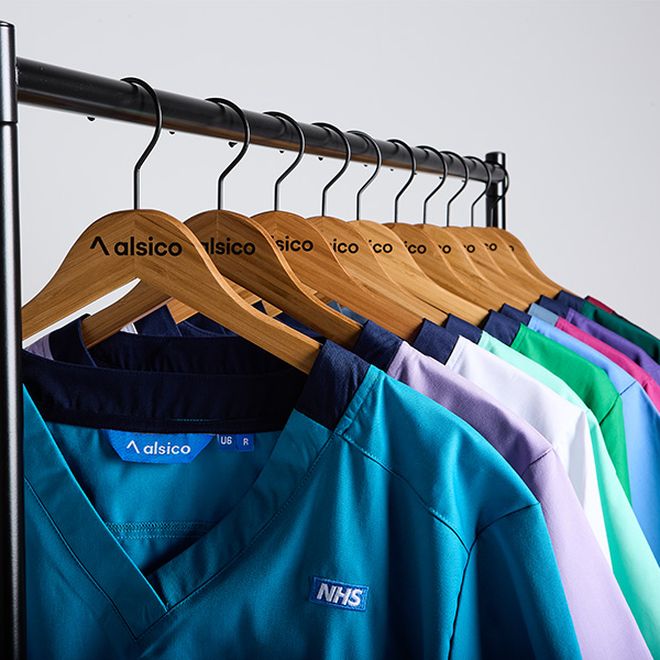
The NHS Healthcare Uniform Framework, introduced in early 2024, addresses this directly. The new system standardises NHS uniform colours across England with 15 colourways and 12 trim colours, each tied to a specific clinical profession. This not only includes nurses, healthcare assistants and pharmacists, but roles that were harder to position within previous NHS uniform colour systems, such as heads of departments.
Roles are encoded into the NHS Healthcare Uniforms themselves, meaning both patients and staff can understand a healthcare professional’s position and seniority at a glance. In addition, when a new starter puts on a uniform that is instantly recognisable, it speeds up the transition from new employee to credible professional. They don't have to earn the recognition because the uniform delivers it from the first shift.
If you're a procurement manager, this standardisation simplifies decision-making considerably. Instead of you having to manage bespoke specifications across departments or sites, you are working from a consistent, nationally recognised system. And for the staff wearing them, clear visual identity reinforces professional standing.
how comfortable healthcare uniforms affect more than morale
Looking the part is important. But if a uniform restricts movement, traps heat, or simply does not fit correctly, it works against the professional it is meant to support. When you're responsible for outfitting hundreds or thousands of staff, comfort should be viewed as a performance issue.
Alsico's 2025 care sector research, conducted in partnership with Care England, found that more than half of care workers said the fit of their uniform affected their ability to carry out their duties effectively. Comfortable movement was ranked among the top drivers of job satisfaction, ahead of many factors that typically dominate management discussions.
The features that make a meaningful difference are well established:
)
belonging built into the design for inclusive healthcare workwear
Professional identity is not only about role recognition: it is also about whether staff feel their organisation has genuinely considered them. For NHS Trusts with diverse workforces spanning multiple sites and demographics, inclusive healthcare workwear should be treated as a basic requirement of responsible procurement.
The publication of BSI's BS 30417 standard for inclusive PPE has formalised what good suppliers have been working towards for some time. It sets expectations around designing for varied body shapes, accommodating biological needs across different life stages, offering gender-inclusive fits, and providing cultural workwear options. Critically, it also sets an expectation that staff are involved in the selection process, rather than having decisions made for them.
Alsico's research found that one in five care workers felt their employer did not involve them in uniform selection. The data on menopause is particularly pointed, with 68% of workers experiencing symptoms reporting that their uniform did not help them cool down. In a workforce where four in five employees are women, these are not edge cases. They are a mainstream workforce that nurse uniform standards and procurement decisions must account for.
The response is not complicated in principle, even if it requires commitment in implementation. Fabrics that regulate temperature, garments that adapt to changing body shape, extended sizing ranges that reflect the real workforce, and a genuine consultation process all send the same message: you are part of this team as you are. This sense of belonging is directly tied to the NHS and healthcare staff identity.
staff retention and the new NHS Healthcare Uniforms
Retention is influenced by many factors, such as pay, management quality, workload, and career development. But the relationship between staff retention and the new NHS Healthcare Uniforms is more direct than it is often given credit for.
Alsico's care sector report identified uniforms as one of the top four drivers of job satisfaction, alongside training access, emotional support, and career prospects. Putting workwear firmly in the workforce strategy conversation, not just the procurement one. Uniform comfort is a direct part of staff retention.
For NHS Trusts managing high-volume recruitment pipelines, every avoidable reason for staff to leave deserves attention. If your staff feel professionally recognised through clear, well-designed NHS Healthcare Uniforms are more invested in their role and in the organisation. It does not replace the other drivers of retention, but it does reinforce them.
what all three pillars depend on
For procurement managers in the NHS, supporting identity through uniform has been a conscious choice. Visual recognition, physical confidence, and a sense of belonging do not happen by accident: they are the result of deliberate decisions made at every stage of the procurement process. From the colour system adopted, to the fabrics specified, to whether staff are consulted before a final brief is signed off.
For NHS Trusts looking to move to the new NHS Healthcare Uniform, that means working with a healthcare uniform supplier UK organisations can hold to a high standard: one that understands the NHS Healthcare Uniform Framework, can deliver it consistently across multiple sites, and that prioritises inclusive and comfortable design.
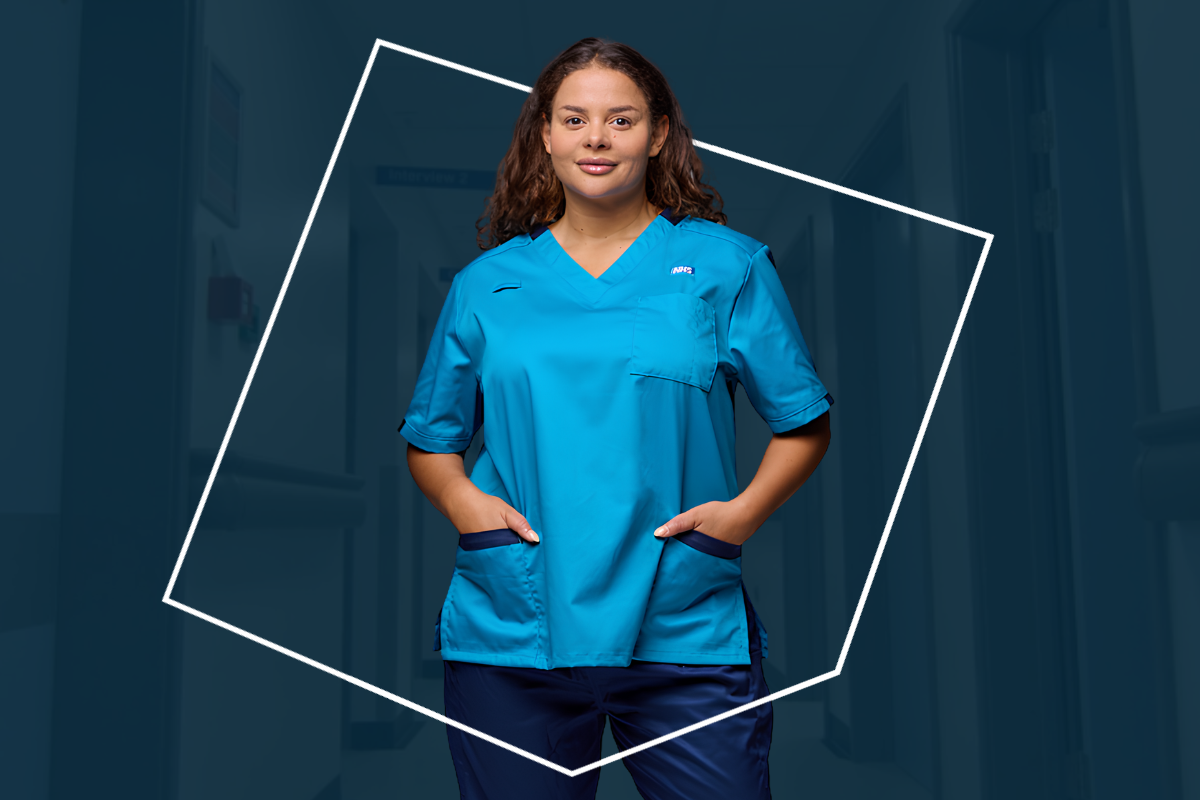
To find out how alsico can support your Trust with healthcare uniforms designed around your workforce, get in touch with our specialists.
healthcare environments we provide uniforms for
healthcare providers
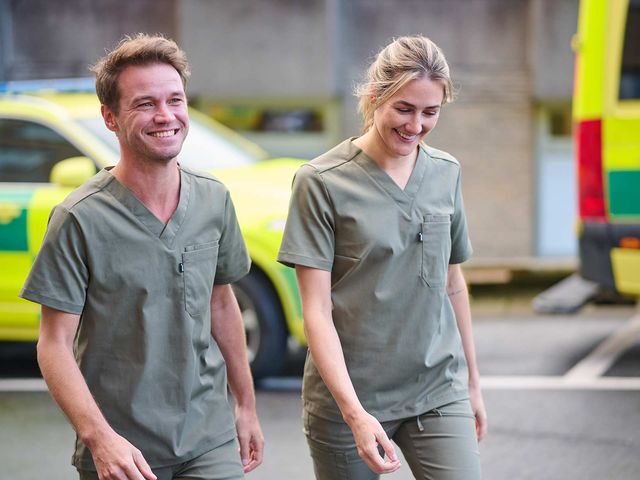
Mobility, total hygiene and comfort. The high demands of an operating theatre are reflected one by one in our clean-air healthcare tunics and healthcare trousers.

healthcare science
From support areas to research labs, our healthcare garments uphold the highest standards, ensuring consistency and excellence throughout your healthcare sciences.

support services
Ensuring your entire operation is clothed in the very best, our workwear solutions for non-clinical areas ensure a consistent and high-quality result for your business.

business administration
Our range embodies a perfect blend of style and durability and meets the needs of the workplace environment. Experience the transformation our office wear solutions can bring to your role.

food services
Food preparation in a healthcare environment demands superior quality, high durability, and comfort for long shifts in the kitchens.

contamination control
When the height of safety is required, our healthcare garments for high-demand areas are made to perform.
contact us
