


24 December 2025
how to choose inclusive PPE: procurement guide
Inclusivity in PPE should no longer be a “nice to have” at your company.
The new British Standard, BS 30417, has formalised what many organisations, including us at alsico, have known for years – that poorly fitting or non-inclusive PPE creates safety risks, wellbeing issues and avoidable barriers for workers.
For uniform procurement teams, the challenge now is knowing how to turn this standard into practical, everyday decision-making.
According to our latest research, nearly half of workers said they’d be more inclined to wear their uniform – including wearing it correctly – if it was more comfortable. And comfort isn’t just about how it physically feels, but how included the wearer feels when they put it on.
This guide provides a clear, step-by-step approach to choosing PPE that aligns with BS 30417, prioritising user comfort and compliance, and ensuring every worker is protected and included.

"Practical guidance designed to ensure employers across all sectors provide staff with personal protective equipment (PPE) that fits, regardless of gender, ethnicity, body shape, age, or disability, has been issued in a long-awaited move designed to help struggling sectors retained skilled workers and ultimately enhance people’s safety at work."
British Standards Institute press release
step 1: understand the standard and your users
The first step to inclusive PPE is understanding what BS 30417 is and who it’s for.
BS 30417 places strong emphasis on user diversity, encouraging selectors to consider all the things that make their employees different – body shape, size, gender, pregnancy, disability, and cultural or religious requirements.
To start, procurement teams should begin with a simple data-gathering exercise:
- Identify all user groups
- Understand specific needs or limitations
- Capture pain points with current PPE
- Include underrepresented or overlooked groups
This early insight ensures procurement decisions are based on real-world needs rather than assumptions or generic sizing charts.


step 2: involve wearers in the selection process
Inclusive PPE cannot be chosen in isolation – it needs employee engagement.
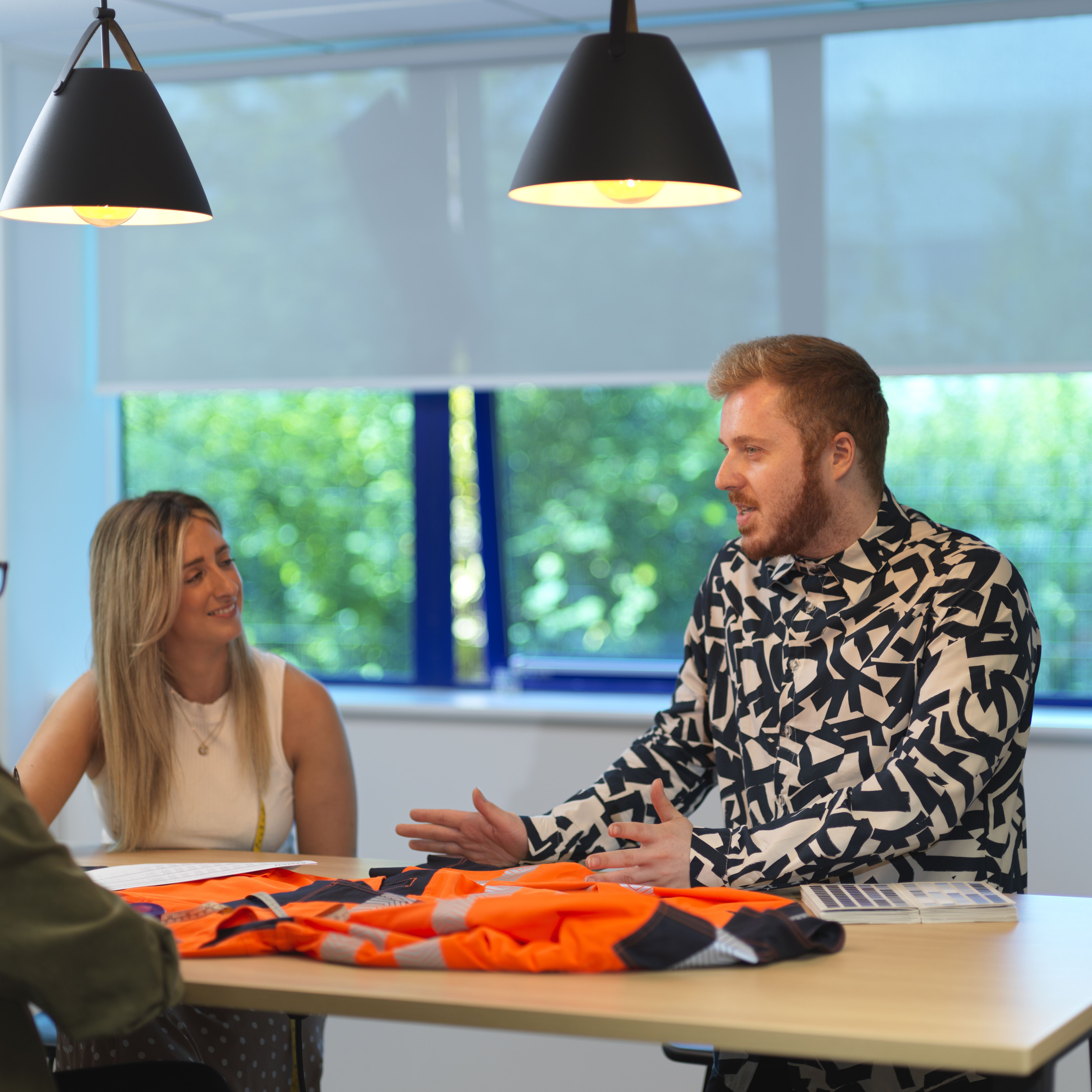
The British Standards Institute (BSI) recommends that procurement teams engage employees at every stage of uniform selection, not only to understand their needs but to also validate whether the proposed PPE would actually work for them.
Ways that you could build user consultation into your selection process could include:
- Running shortlisting sessions with mixed user groups
- Collecting structured feedback on comfort and mobility
- Avoiding default reliance on “one-size-fits-all” garments
This approach leads to higher compliance, fewer garment returns and more confident, comfortable wearers.
step 3: carry out fit testing and adjustments
Compliance alone does not guarantee suitability for your wearers.
Fit testing is central to BS 30417 and ensures PPE performs correctly on a range of body shapes. For procurement teams, this means:
- Scheduling structured fit-test sessions with different uniform manufacturers
- Documenting feedback from wear tests – especially around comfort and movement
- Taking adjustment requests seriously, rather than just encouraging wearers to resize
- Working with uniform manufacturers that use multiple body blocks or can offer extended size ranges
Fit shouldn’t be negotiable. If a garment restricts movement, causes pressure points or compromises dignity, it needs to be reconsidered.
step 4: partner with manufacturers who design for inclusivity
A huge helping hand in your uniform procurement process could be choosing a manufacturer who share your commitment to inclusive design.
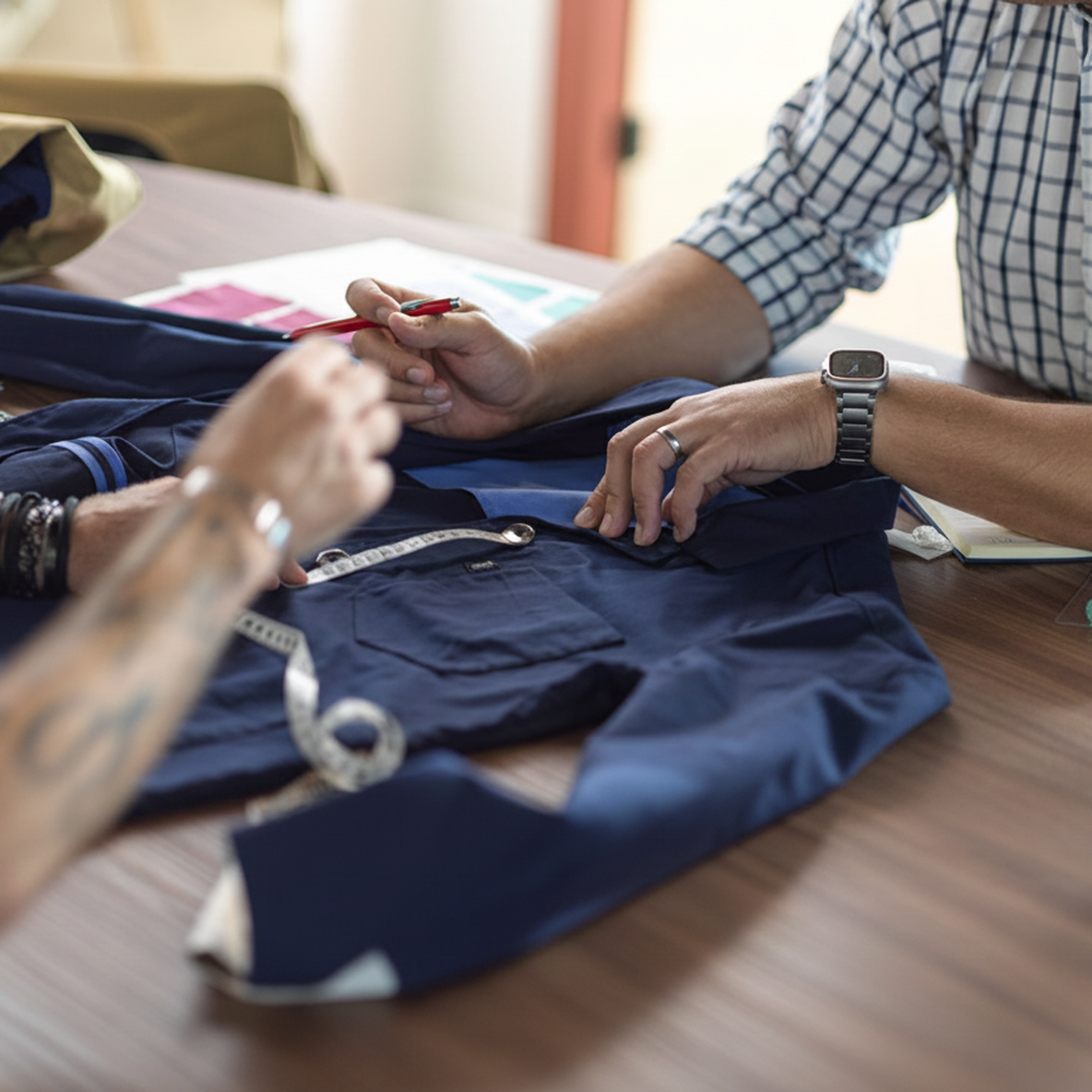
Look for a partner who uses real body-measurement data, run wearer trials, and offer specialist fit ranges – to name a few.
To ensure they’re the right partner for your company, procurement teams should ask questions such as:
- How do you collect sizing and fit data?
- Are your garments tested on a diverse wearer group?
- Do you offer cultural, maternity, or adaptive options?
- How much stretch, mobility and breathability does your workwear have?
- Can you offer custom-made design if needed?
The right uniform manufacturer will help you go beyond minimum compliance – creating PPE that supports comfort, dignity and safety for every member of your team.
“BS 30417 marks a pivotal step forward for our industry. For too long, PPE design has defaulted to a one-size-fits-all approach that doesn’t reflect the diversity of today’s workforce. By setting out clear, practical guidance on inclusive provision, this standard helps ensure that every wearer is protected, comfortable and able to perform at their best.”
Charlotte Clarke, Managing Director at alsico UK
step 5: assess inclusivity in the product specifications
Uniform manufacturers can be your greatest ally or adversary when it comes to finding the right inclusive PPE for your wearers.
When reviewing uniform options, look for manufacturers that offer inclusive design features that support a diverse workforce. Consider whether the PPE range includes things such as:
- Extended sizing, including petite and tall fits
- Maternity adaptations
- Cultural or religious options
- Menopause-friendly designs
- Adaptive or flexible features for varied mobility
- Stretch and ergonomic shaping to support comfort
If a supplier is unable to meet these requirements, the workwear is unlikely to support BS 30417 and inclusive PPE principles.


step 6: evaluate training and information provision
Inclusivity is not only about the garment – it’s about ensuring each wearer knows how to use it correctly.
As found in our latest survey, 1 in 5 workers didn’t understand the risks of not wearing their uniform correctly and almost a quarter say they were never told how to wear it to stay safe. Beyond comfort, BS 30417 highlights the need for accessible, clear information on PPE use, care, and maintenance.
Procurement teams need to provide their wearers with:
- Easy-to-understand instructions
- Training materials or toolbox talks
- Maintenance guidance
- Information covering cultural or gender-specific considerations
Many manufacturers will be able to provide this information for you, but regardless of where it comes from, good training both reduces misuse and extends garment life – improving both safety and cost efficiency.
step 7: balance cost with long-term safety
BS 30417 is explicit about this: cost should never override suitability.
Cheaper options may appear attractive initially, but they can also lead to reduced compliance, poor protection and faster replacement cycles.
When considering the cost of PPE, procurement teams need to also consider:
- Lifespan of higher-quality garments
- Reduced return rates through better fit
- Improved wearer satisfaction and safety
- The wider cost of injuries or non-compliance
Inclusive PPE is an investment in people and the company, and therefore in overall operational resilience.


step 8: implement monitoring and feedback loops
Finally, remember that inclusivity isn’t a one-off purchase your company can make.
PPE needs evolve as your workforce change, and so ongoing monitoring is essential for BS 30417 alignment. To build long-term review into your procurement policy, procurement teams should:
- Gather regular user feedback
- Review garment performance across different groups
- Track any patterns in returns or complaints
- Work with their manufacturer to make iterative improvements
A continuous improvement mindset helps organisations stay aligned with best practice, whilst ensuring no user group falls through the gaps.
how alsico supports inclusive PPE procurement
At alsico, inclusivity is woven into every stage of our design and manufacturing process.
Our approach is built on one of the industry’s most comprehensive fit databases, giving us deep insight into the body shapes, proportions and movement patterns of today’s diverse workforce. This data informs the multiple body blocks we use across our ranges – ensuring garments are created for real people, not averaged assumptions.
We combine this with advanced design testing, including 3D simulation fitting, wearer trials and continuous end-user feedback. These insights allow us to refine our patterns, improve comfort, and ensure protection never compromises mobility or dignity.
Our workwear includes our very own stretch fabric, ALSIFLEX®, extended fits, maternity options, cultural and religious adaptations, menopause-friendly garments, and flexible design features that support varied needs. And, for organisations with more complex or specialist requirements, our custom-made service helps create bespoke pieces that align precisely with BS 30417 principles.
Working with alsico means partnering with a team committed not only to compliance, but to progress. We’re here to support procurement teams through assessment, fit testing, selection, and long-term improvement – ensuring every member of your workforce receives PPE that truly fits, protects, and respects them.
ready to improve inclusivity in your PPE?
Creating a safer, more comfortable environment starts with the right partner. Our team can help you review your current provision, assess gaps against BS 30417, and select garments that support every member of your workforce.
learn more about the environments we supply into

Environments
wearer protection
Protection is weaved into every part of alsico, we build it into everything we do and it drives our every decision. Our protective workwear range covers all high-safety sectors.

Environments
healthcare
We are one of the largest healthcare uniform suppliers in the UK, and are the majority supplier for the new NHS National Healthcare Uniform project.

Environments
workwear
At alsico, we have shown excellence in a wide range of work uniforms, ranging from warehousing to global travel companies and from transportation to construction.

Environments
electrification
Our passion for creating innovative fabrics has positioned us as a key supplier in the exciting new sector of electrical safety clothing, from battery companies to aerospace, to all anti-static environments.

Environments
contamination control
We have developed a specialism in cleanroom clothing and uniforms, delivering exceptional performance in highly controlled environments.

Environments
emergency response
We are always honored to be asked to provide workwear for our emergency services teams. We put our trust in them to help to look after us, and we do our very best in return, delivering performance when it matters.
contact us
