


31 March 2026
reducing admin time in care home uniform ordering: 7 practical tips
Managing uniforms across a large care home group can be incredibly complex. You're not only tracking sizes for hundreds of staff, you're also coordinating orders across multiple sites and keeping on top of new starters and leavers.
For procurement managers and operations teams responsible for uniform management at scale, the challenge goes beyond sourcing the right garments. It’s about building a process that runs efficiently, consistently, and with minimal manual intervention.
Working with a care home uniform supplier that understands the demands of the sector is just one of several ways to reduce the admin involved in uniform ordering.
why uniform admin is a growing challenge for care providers
Care homes operate in a uniquely demanding environment. High staff turnover, multiple departments, varied shift patterns, and strict hygiene requirements all create a complex uniform landscape. When your organisation operates across 20, 50, or 100+ sites, that complexity multiplies.
Without a structured approach to uniform procurement, common pain points emerge:
- Manual ordering via spreadsheets, emails, or phone calls. All time-consuming and prone to errors.
- Inconsistent sizing and stock across different sites, leading to delays and returns.
- Difficulty tracking budgets and spend when ordering is decentralised.
- No clear audit trail for who ordered what, when, and for which location.
- Time lost onboarding new starters because uniform processes are unclear or slow.
These administrative headaches also have a direct impact on staff experience, professional appearance, and infection control compliance. A structured approach to care home uniform management can free up significant time for procurement teams and site managers alike.

7 practical tips to reduce admin in care home uniform ordering
1. centralise your ordering process
One of the most effective ways to cut uniform admin is to move away from fragmented, site-by-site ordering. When each care home places orders independently, it creates duplication, inconsistency, and a lack of visibility for your central team.
A centralised uniform ordering system brings all sites onto a single platform, giving you oversight of every order across the group. This does not mean removing local autonomy. Site managers can still place orders for their teams. But every order flows through one consistent, trackable system.
Centralisation also simplifies supplier management. Rather than individual sites contacting multiple staff uniform suppliers, you work with a single, trusted partner who understands the full scope of your contract.
2. use a digital ordering portal
If your organisation still relies on email chains, paper forms, or phone calls to place uniform orders, the admin burden will always be higher than it needs to be. Switching to online uniform ordering is one of the most impactful changes a care home group can make.
A well-designed portal allows site managers or designated uniform coordinators to:
- Browse available garments specific to their site and roles.
- Place and track orders without contacting the supplier directly.
- View real-time stock availability to avoid delays.
- Access data on spend, order history, and garment allocation.
This shift from manual to digital saves hours of admin time each month. It also reduces errors. No more mis-keyed sizes, forgotten orders, or unclear email threads.
3. standardise your uniform range
Complexity is one of the biggest drivers of admin. When every care home in a group has slightly different uniform styles, colours, or garment specifications, procurement becomes a logistical challenge.
A clear care home uniform policy that standardises the garment range across all sites significantly reduces the number of decisions that need to be made at local level. That means defining:
- Which garment types are approved for each role: tunics, scrubs, polo shirts, trousers.
- A consistent colour scheme that supports role differentiation across all sites.
- Embroidery and branding standards for a cohesive, professional appearance.
- Agreed allocation rules: how many garments per staff member, and replacement cycles.
Standardisation also creates economies of scale. A unified care home workwear programme allows your supplier to hold stock more efficiently and offer better pricing, because they are managing one coherent range rather than dozens of variations.
NHS England and NHS Wales have already demonstrated the value of this approach nationally. Following a two-year consultive tender process, the NHS Healthcare Uniform Framework was established to bring consistency, quality, and efficiency to uniform provision across NHS Trusts in England.
4. set up role-based wardrobe allocations
Not every member of staff needs access to the full uniform catalogue. In a large care home, roles span clinical care, catering, housekeeping, maintenance, administration, and management. And each role comes with different care home workwear requirements.
Setting up role-based allocations within your uniform management system means that when a site manager orders for a new care assistant, they only see the garments relevant to that role. This eliminates guesswork, prevents incorrect orders, and speeds up the process.
For organisations managing hundreds or thousands of wearers, this structural change alone can save considerable time and significantly reduce returns.
5. streamline the new starter and leaver process
Staff turnover in the care sector remains one of the highest of any UK industry. For procurement teams, that translates to a constant cycle of ordering for new starters and managing returns from leavers.
Building a clear, repeatable process for new starter uniform provision. Ideally it should be integrated into your onboarding workflow, because it removes one of the most common admin bottlenecks. Consider:
- Using digital sizing tools so new staff can be measured remotely before their first day, removing the need for physical fitting sessions.
- Pre-configuring new starter packs within the ordering portal based on role and site.
- Establishing wearer-packed deliveries so each new starter receives their complete uniform set individually packaged and ready to go.
- Setting clear leaver protocols for uniform returns, including condition expectations and timeframes.
When the new starter process is smooth and largely automated, site managers spend less time chasing sizes, chasing deliveries, and fielding queries from frustrated staff.
6. use data to plan ahead
Reactive uniform ordering–placing orders only when stock runs low or a request comes in–creates spikes in admin workload and risks delays. A more proactive approach uses data to anticipate demand.
A good uniform management system should give you access to:
- Ordering patterns across sites and departments.
- Seasonal demand trends, such as higher recruitment periods.
- Garment lifecycle and replacement frequency.
- Budget tracking by site, department, or cost centre.
This visibility allows you to schedule bulk uniform orders at optimal times, negotiate better terms, and avoid the last-minute scrambles that consume disproportionate amounts of time. Downloadable data reports can also support audit and compliance requirements without additional manual effort.
7. partner with a supplier who understands scale
Your choice of healthcare uniform supplier can be the single biggest factor in reducing uniform admin. A supplier that specialises in large, multi-site organisations will already have the infrastructure, systems, and experience to handle complexity on your behalf.
When evaluating a care home uniform supplier, look for:
- A dedicated online ordering portal with role-based access and multi-site management.
- Proven experience with large-scale uniform rollouts, including NHS Healthcare Uniform provision.
- Dedicated account management, with a single point of contact for your entire contract.
- Digital sizing tools that reduce fitting admin and improve accuracy.
- A robust supply chain that guarantees availability and consistent lead times.
- Wearer-packed deliveries that arrive organised and ready to distribute.
A strong supplier relationship transforms uniform procurement from a time-consuming operational task into a managed service.
how alsico reduces uniform admin for care home providers
At alsico, we work with some of the UK’s largest care home groups and healthcare organisations. We understand the administrative pressures that come with managing uniforms at scale, and our solutions are built to take that complexity off your hands.
simplify your care home uniform management with alsico
Reducing admin time in care home uniform ordering means building smarter systems that work harder for your organisation. With the right processes, tools, and supplier partnership, your procurement team can reclaim significant time and deliver a better experience for staff at every site.
At alsico, we are trusted by the largest healthcare organisations in the UK to deliver uniform solutions that combine quality, innovation, and operational efficiency. From our online ordering portal to our dedicated account management team, we make uniform management simpler.
To find out how we can support your care home group with a tailored, low-admin uniform solution, speak to our team today.
healthcare environments we provide uniforms for
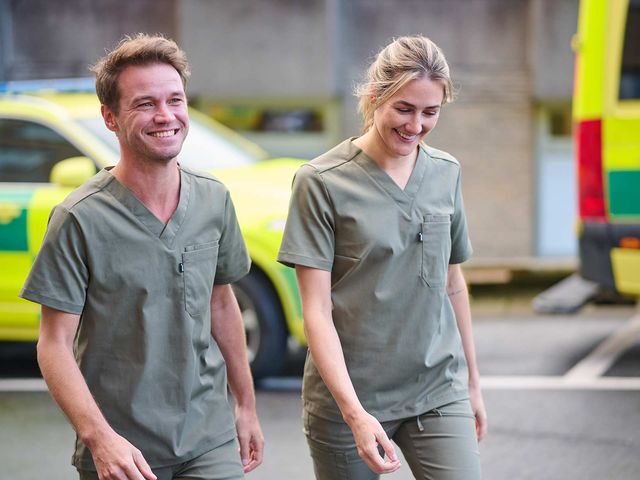
healthcare providers
Mobility, total hygiene and comfort. The high demands of an operating theatre are reflected one by one in our clean-air healthcare tunics and healthcare trousers.

healthcare science
From support areas to research labs, our healthcare garments uphold the highest standards, ensuring consistency and excellence throughout your healthcare sciences.

support services
Ensuring your entire operation is clothed in the very best, our workwear solutions for non-clinical areas ensure a consistent and high-quality result for your business.

business administration
Our range embodies a perfect blend of style and durability and meets the needs of the workplace environment. Experience the transformation our office wear solutions can bring to your role.

food services
Food preparation in a healthcare environment demands superior quality, high durability, and comfort for long shifts in the kitchens.

contamination control
When the height of safety is required, our healthcare garments for high-demand areas are made to perform.
contact us
