




14 July 2025
What causes an arc flash?
Arc flash is responsible for some of the most severe workplace injuries in the electrical sector. Research suggests that around 10% of all reported electrical incidents involve an arc flash event. And because many incidents go unreported or are classified under broader categories, the true figure is likely higher.
The consequences of an arc flash incident can be catastrophic. Temperatures exceeding 19,000°C, explosive pressure waves, molten metal projected at speeds of up to 300 metres per second, and injuries that range from severe burns to fatalities. Yet in many cases, the root causes are identifiable and preventable.
This blog post breaks down the science behind why arc flash occurs, the most common causes of arc flash, and the steps employers must take to keep people safe.
why do arc flashes happen?
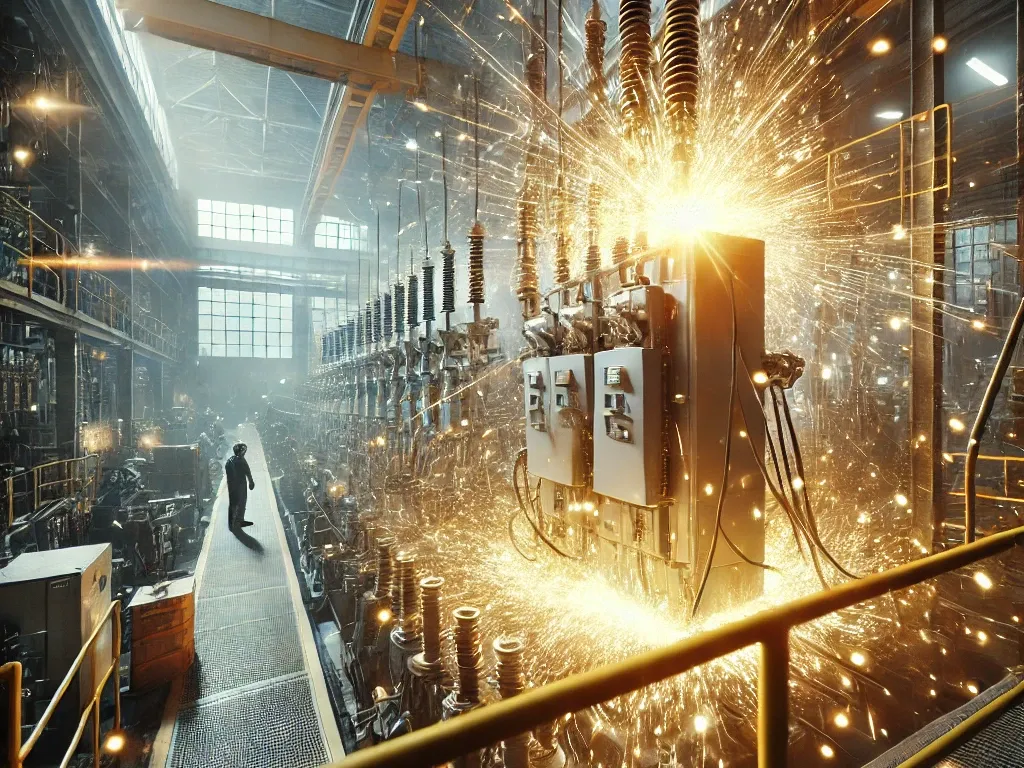
Arc flashes occur when an electrical current leaves its intended path and travels through the air between conductors, or from a conductor to an earthed surface. This phenomenon is known as electrical arcing. Electrical arcing isn’t always dangerous. But when current and energy are high enough, such as in high-power electrical systems, it can result in an intense burst of heat and light called an arc flash.
Arc flash temperatures can exceed 19,000°C – hotter than the surface of the sun – instantly vaporising metal and causing life-threatening burns. These events are sudden and violent, leaving little time to react. Workers in sectors like utilities, rail, construction, and manufacturing are particularly at risk.
For more information on what arc flash is and the protective measures available, see our guides to arc flash protection and arc flash PPE.
the science behind electrical arcing
To understand what causes arc flash, it helps to understand the mechanism of electrical arcing.
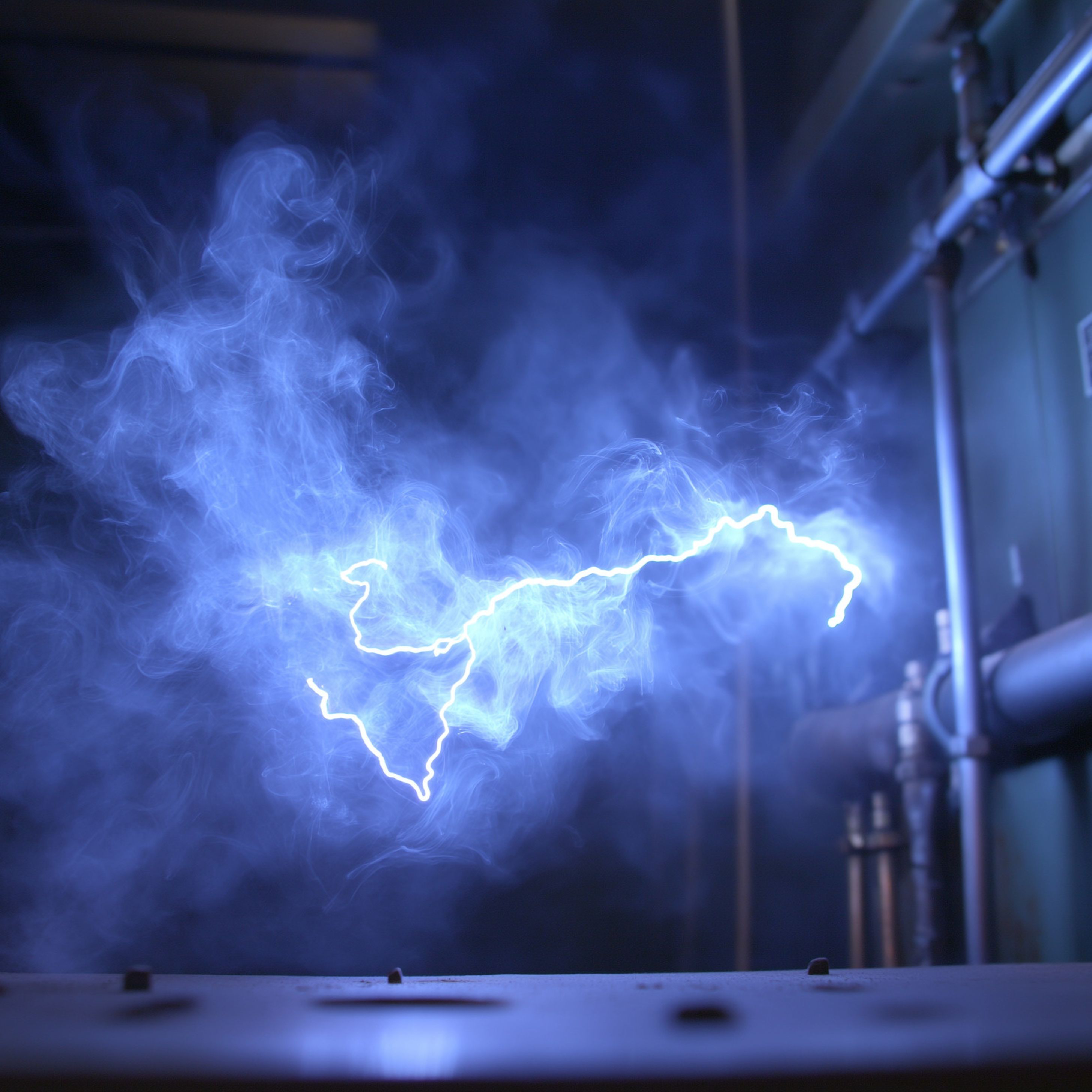
Under normal conditions, air is an effective insulator. However, when the voltage between two conductors is high enough (or the gap between them is small enough), the electric field can ionise air molecules, stripping electrons and creating a conductive channel of superheated gas known as plasma. Once this channel forms, electrical current flows through it. This is an electrical arc.
What makes arcing particularly dangerous is negative incremental resistance. As arc temperature increases, its resistance decreases, drawing in more current. The arc effectively feeds itself, growing hotter and more energetic until something interrupts it—typically a protective device tripping, a conductor melting, or the gap becoming too large to sustain it.
In controlled applications such as arc welding, this is harnessed safely. But in uncontrolled settings (inside a switchboard, motor control centre, or distribution panel), it can escalate into an arc flash.
common causes of arc flash
Arc flash is almost always the result of a fault in an electrical system, typically a short circuit or an arcing fault, where current diverts from its intended path. However, the specific triggers behind these faults vary. The most common underlying causes of arc flash in industrial and commercial environment are:
1. inadequate system design or modification
Arc flash hazards can be embedded into an electrical system long before it is ever energised. Design decisions that fail to account for fault current levels, protective device coordination, or conductor spacing can create conditions where an arcing fault is far more likely (and far more severe) when it does occur.
This is particularly relevant if your electrical systems have evolved over time, such as by adding new loads, rerouting cables, integrating backup generators or connecting additional switchboards. If these modifications are made without a corresponding review of your system's arc flash hazard levels, the risk grows silently. Even something as simple as failing to update circuit breaker trip settings after a system upgrade can result in longer fault clearance times and greater incident energy.
System design should never be treated as static. Engaging qualified electrical engineers at the outset, and after every major modification, is critical to ensuring that potential arc flash causes are identified and controlled before a single switch is thrown.

2. human error and unsafe work practices
Human error remains one of the most common causes of arc flash incidents. Contact with live conductors, use of uninsulated or incorrectly rated tools, failure to verify isolation before beginning work, and bypassing lockout/tagout procedures can all create the conditions for an arcing fault.
The risk is compounded in environments where work on or near energised equipment is routine. Even experienced electrical engineers and technicians can make critical errors when working under time pressure, in confined spaces, or in environments where visibility is poor. Common scenarios include a test probe touching the wrong surface inside a live panel, a tool slipping and bridging two conductors, or a worker re-energising a circuit without confirming that a downstream fault has been cleared.
Employers must ensure that all personnel follow strict electrical safety protocols, and that no work takes place unless it is absolutely safe to proceed. Proper supervision, clear procedures, and a culture of hazard awareness all help reduce the human factor in arc flash risks.

3. equipment failure and poor maintenance
Electrical equipment degrades over time. Loose connections, worn insulation, aged switchgear or corroded terminals can all increase the likelihood of a fault developing into an arc flash.
In some cases, equipment may not even be rated to handle the loads or conditions it’s exposed to. This is particularly common in harsh environments, or in older installations where loads have increased over the years without corresponding infrastructure upgrades.
The types of equipment most associated with arc flash incidents include:
- Circuit breakers
- Transformers
- Switchgear and switchboards
- Motor control centres (MCCs)
- Panel boards
- Disconnect switches
- Cables and wiring
- Protective relays
Failing to inspect, test and service electrical components regularly can allow these issues to go unnoticed until they result in a serious incident.
Investing in reliable, correctly rated components, engaging in preventative maintenance and replacing ageing assets proactively is a fundamental part of managing arc flash risk at scale. Thermographic surveys, partial discharge testing and insulation resistance testing can all help identify deteriorating equipment before failure occurs.

4. environmental causes (dust, moisture, foreign objects)
Not all arc flash causes originate from within the electrical system itself. External environmental factors frequently contribute to arcing faults. These can include:
- Dust and particulate contamination – In manufacturing, processing and mining environments, conductive dust can accumulate on busbars, terminals and insulating surfaces inside electrical enclosures. Over time, this creates a conductive bridge between conductors, providing a pathway for current to arc across.
- Moisture and condensation – High humidity, water ingress and condensation caused by temperature fluctuations can all introduce moisture into electrical enclosures. Water is a conductor; even a thin film on an insulating surface can lead to a short circuit and potential arc flash.
- Foreign objects – Tools, fasteners, cable ties or other metallic objects accidentally left inside a panel or switchboard after maintenance can trigger an immediate arcing fault. Vermin, particularly rodents, entering enclosures through unsealed cable entries is another well-documented cause.
These hazards are harder to predict than equipment failure or human error, but can be controlled through disciplined housekeeping, sealing enclosures properly and conducting thorough checks before energising equipment.

5. inadequate protective device coordination
This cause is less visible than the others but can be one of the most consequential, especially in large or complex electrical systems.
Protective devices such as circuit breakers, fuses, and relays are designed to detect faults and interrupt current quickly. Their operating speed determines how long an arc persists and how much energy is released. Coordination ensures the device closest to the fault trips first, isolating only the affected section.
When coordination is poor – e.g. due to incorrect settings, unreflected system changes, or ageing equipment – fault clearance times increase. A few additional cycles of arc duration can dramatically increase the incident energy at the point of fault, turning a manageable event into a catastrophic one.
Protection coordination studies should be reviewed whenever your electrical system is modified, and devices tested and maintained to confirm they will operate within their specified time-current characteristics. In critical systems, arc flash relays that detect light and current signatures can trip breakers in milliseconds, greatly reducing incident energy.

how to manage arc flash risk
Managing arc flash risk means ensuring that all electrical systems are constructed, maintained and operated safely, in accordance with the Electricity at Work Regulations 1989.
Employers must also carry out suitable and sufficient risk assessments for all work activities that present a risk of injury, including electrical hazards. The widely adopted 4P framework (predict, prevent, process, protect) provides a structured methodology for identifying and mitigating potential causes of arc flash.
It’s crucial to remember that arc flash risk assessment is not a one-off exercise. As your electrical systems are modified, loads change and equipment ages, the hazard profile evolves. Periodic reassessment is essential.
why arc-rated workwear is essential
Even with rigorous system design, robust maintenance programmes and strict procedural controls, arc flash can still occur. That’s why arc flash garments remain the last and most critical line of defence.
Arc-rated workwear is engineered to withstand the thermal energy and blast forces produced by an arc flash event. This includes flame-resistant coveralls, arc flash hoods, face shields, gloves and dielectric footwear. Every item must be rated to at least the incident energy level identified in your arc flash risk assessment.
If you are managing workers across high-risk sites, selecting the right arc flash PPE programme is a strategic procurement decision. The workwear must meet the relevant performance standards, fit the range of body types in your workforce, be comfortable enough for extended wear in demanding conditions, and be supported by a reliable supply chain. Workwear doesn't prevent the causes of arc flash, but it can mean the difference between survivable injuries and a fatality.

trust alsico for arc flash clothing
Arc flash is fast, violent and unforgiving. If electrical hazards are a daily reality in your operations, arc flash protection isn't optional – it's essential.
Explore alsico's arc flash workwear range today to find solutions designed for the demands of large-scale operations, or contact our team to discuss your requirements.
frequently asked questions about arc flash causes
Arc flash incidents are relatively rare compared to other workplace injuries, but they are disproportionately severe when they do occur. In most well-managed electrical environments, incidents are uncommon; however, even a single failure in procedure or equipment can lead to an event. This is why potential arc flash causes should be taken seriously, and steps taken to manage risk.
Yes. While many arc flashes are associated with short circuits, they can also occur during “arcing faults,” where current leaks through ionised air rather than a solid conductor contact. This can happen when insulation is compromised, or when conductive dust or moisture creates an unintended pathway for current.
Not necessarily. While higher voltage increases the likelihood of air ionisation, arc flash severity is primarily driven by available fault current and clearing time. The severity of arc flash incidents can actually be higher at low voltage (typically below 1,000V) than at high voltage. This is partly because low-voltage systems often have high available fault currents, and partly because workers tend to take fewer precautions around equipment they perceive as lower-risk.
Arc flashes can appear to happen randomly, but they are always triggered by an underlying cause. In most cases, that cause is a combination of conditions developing over time – such as a loose connection that has been gradually worsening – rather than a single, obvious failure at the moment of the event. These factors are often internal and not visible during normal operation, which is why arc flashes seem to happen suddenly and without warning.
Oxygen does not cause an arc flash directly. However, oxygen can increase the severity of the event once an arc has formed. In oxygen-enriched environments, combustion is more intense, meaning surrounding materials may ignite more easily and burn more rapidly. This makes oxygen a contributing factor to fire risk during an arc flash event, rather than a cause of the electrical arc itself.
There is no fixed statutory interval in UK law, but best practice is to review your arc flash studies whenever a significant change is made to the electrical system. Even without changes, periodic reassessment (typically every three to five years) is recommended to account for equipment ageing and identify potential causes of arc flash.
get in touch
