17 August 2026
Arc flash: why low voltage does not mean low risk
Arc flash is often framed as a high voltage problem. Substations, transmission plant, the switchyards attached to heavy industry. These are the images the phrase tends to bring to mind. And if you've absorbed that framing, the intuition behind it is simple. Higher voltage sounds more dangerous, so higher voltage must be where the arc flash risk sits.
That intuition is worth interrogating early if you're responsible for electrical safety across a large organisation. Low voltage systems account for many arc flash incidents recorded in industrial settings, and the injuries they produce are frequently severe. A distribution board rated at 400V can release enough incident energy to cause third-degree burns on your workers, permanent hearing damage, and fatal internal injuries at close range. The voltage on the nameplate does not tell you what the fault will do.
At what voltage can arc flash occur?
Arc flash can occur at any voltage capable of sustaining an arc across an air gap once one is initiated. Incidents have been documented at system voltages as low as 120V, and sustained arcing faults are well-established phenomena on 208V, 240V, 400V, and 480V systems. There is no clean threshold below which you can assume arc flash becomes physically impossible.
What determines whether an arc will sustain itself is not the voltage in isolation. It is the combination of voltage, available fault current, electrode gap, enclosure geometry, and the speed at which your upstream protection clears the fault.
A 400V system fed from a large transformer with a slow-acting breaker can deliver an arc flash event with incident energy comparable to, or worse than, many higher-voltage scenarios. So, the question you should be asking is not whether the voltage is high enough to arc. It is whether your system can pour enough energy into the arc before something interrupts it.

Where the low voltage arc flash misconception comes from
Three factors have combined to entrench the idea that low voltage arc flash is a lesser concern, and you might even recognise all three in your own organisation.
The first is shock-focused training. Electrical safety education has historically emphasised electrocution risk, which does scale broadly with voltage. Your workers are taught, correctly, that higher voltages present a greater risk of fatal shock. The problem is that arc flash follows different rules, and the shock hierarchy gets carried over to arc flash by association. If your training material treats arc flash and electric shock as the same category of hazard, this transfer is almost guaranteed.
The second is the visibility of high voltage incidents. When an arc flash event occurs at a transmission substation, it tends to be reported, investigated formally, and referenced in industry guidance. The low voltage incidents on your factory floors and in your switchrooms are more common but less visible, often recorded internally as burn injuries or electrical incidents rather than being publicly documented as arc flash events.
The third is the sheer volume of low voltage work. Much of the electrical maintenance you're managing (panel work, breaker replacement, motor control centre tasks, distribution board inspections) happens at low voltage. Your exposure rate is high, but because each individual task feels routine to the workers doing it, the cumulative risk is often underweighted in day-to-day planning.
High voltage arc flash vs low voltage
The physics of an arc is broadly the same at any voltage. What differs across the arc flash voltage range is the character of the risk your workforce is exposed to.
High voltage systems
Typically involve fewer workers, more restricted access, more formal permit-to-work regimes, and greater physical separation between personnel and live equipment. The consequences of a high voltage arc flash event are severe, but the exposure is generally more controlled. Workers approaching high voltage plant tend to do so with full awareness of the hazard and with procedures specifically built around it.

Low voltage systems
Are the opposite. Workers interact with them constantly, often in confined spaces, frequently with covers removed and hands close to energised parts. Routine activities may place your personnel well within the arc flash boundary of a fault they may not have been trained to expect. A low voltage arc flash event catches your workers at close range, potentially with limited PPE, and often without the situational awareness that high voltage work culture instils.

The result is that while a single high voltage event may release more total energy, the frequency and proximity of low voltage exposure means the population-level injury burden across your workforce is disproportionate on low voltage work. This is what your risk assessment and PPE programme need to reflect.
The problem with an ‘arc flash categories by voltage’ chart
A persistent error you'll likely encounter in arc flash risk management is the assumption that PPE category can be selected on the basis of system voltage alone. Requests for an ‘arc flash categories by voltage’ chart come up regularly, and the answer is that no such chart exists in any authoritative form – because voltage is not the variable that determines the PPE your workers need.
The relevant variable is incident energy, measured in calories per square centimetre (cal/cm²) at the working distance. Incident energy depends on:
- Available fault current at the point of work
- Arcing duration, which is governed by upstream protective device clearing time
- Electrode configuration and gap
- Enclosure size and geometry
- Working distance
A 400V panel in your facility, fed from a 2,500 kVA transformer with a slow main breaker, can produce incident energy that requires the highest PPE category. A 6.6 kV cubicle protected by fast differential protection can require a lower category. Voltage on its own tells you almost nothing.
The NFPA 70E table-based method (in jurisdictions where it applies) does use voltage as one input, but only in combination with fault current, clearing time, and equipment type, and its use is bounded by specific parameter ranges. Outside those ranges, or where any parameter is uncertain, an incident energy analysis under IEEE 1584 is the appropriate approach. Any internal document that maps PPE category to voltage alone should be treated as a red flag when you next audit, and any arc flash label generated from a voltage-only assumption should be reviewed.
What this means for arc flash protective clothing procurement
For any business dealing with arc flash risk, particularly large organisations running dozens or hundreds of sites, the operational implications for you are significant.
Discover arc flash protective clothing from alsico
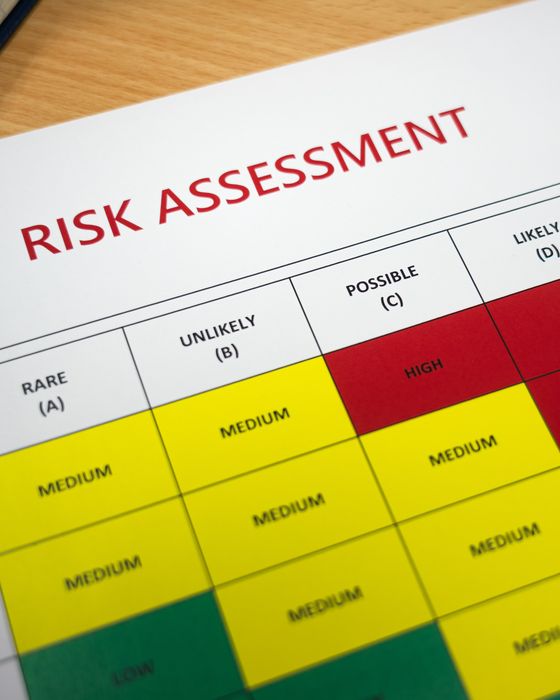
The key takeaway is straightforward: when it comes to arc flash, voltage alone is not a reliable indicator of risk. Effective protection starts with a robust arc flash risk assessment, up-to-date incident energy studies, and task-specific procedures. From there, organisations need to ensure workers are equipped with arc-rated PPE that reflects the actual hazards they face.
At alsico, we take the same evidence-based approach to arc flash clothing. Our arc-rated workwear is designed to help organisations protect employees working in environments where electrical hazards are present. We combine rigorously-tested protection with comfort, durability and wearability: our goal is to support compliance without compromising on day-to-day performance. If you’re reviewing your current arc flash workwear programme, our specialists can help you identify the most appropriate solutions for your workforce. Contact alsico today to discuss your requirements.
contact
Request more information
You might also want to read