10 August 2026
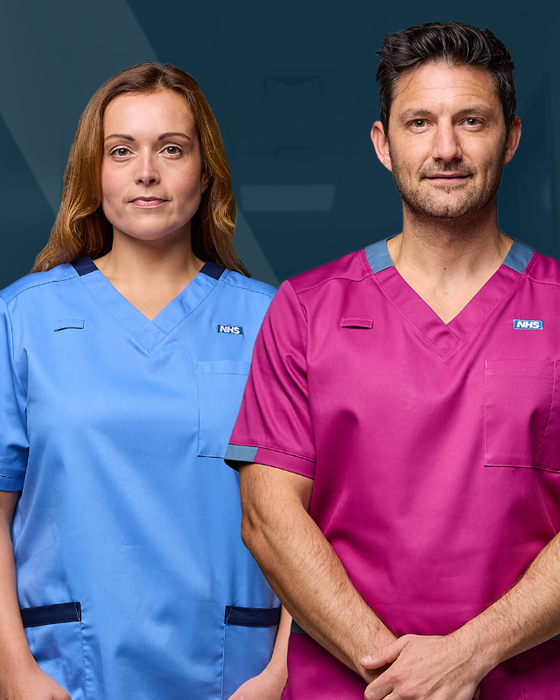
Healthcare workwear: balancing durability and comfort in high-wash environments
When specifying healthcare workwear at scale, it’s easy to treat durability and comfort as two separate decisions. Durability for the wear and laundering the garment has to survive, comfort for how it feels to wear. If they are ever evaluated against each other, it’s during a retrospective review. And usually only after staff have complained or replacement rates have crept up.
The reality is that durability and comfort need to be specified together. Fabric technology, fibre and yarn construction, garment design and testing all influence how a uniform feels during a shift and how it performs over repeated laundering. With the right combination, you don’t have to treat comfort as something gained at the expense of service life. The expertise lies in matching those choices to the role, wash regime and expected use.
What you're specifying is a garment that must be fit for purpose across its full life. It'll be worn for long shifts, washed after every one, expected to hold appearance and integrity through hundreds of wash cycles, and expected to support your infection prevention and control (IPC). Every property the garment needs has to be considered together.
How healthcare workwear ages
A healthcare uniform lives a demanding life. It gets worn for a full shift, changed at the end of the day, and washed at the hottest temperature the fabric can tolerate. Under general IPC guidance, this is usually 60°C for cotton-blend fabric. It’s a cycle that repeats several times a week, for years, across every garment in your programme. Wear plus wash plus wear plus wash, hundreds of times per garment.
That regime is what determines the useful life of any healthcare workwear specification. Early wash performance can look similar even when long-term durability is very different. It's the cumulative behaviour over time that separates a serviceable specification from a poor one.
What repeated washing does to fabric
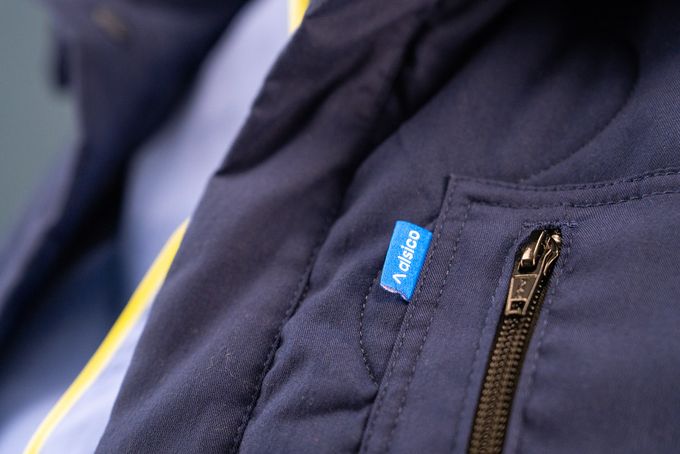
Repeated hot washing wears healthcare workwear down in four main ways. Fibres break down through hydrolysis and oxidation, particularly cotton and elastane. Dye molecules migrate or break down, causing colour drift and fading. Seam threads can abrade or fail at stress points. And soiling and detergent residue accumulate where wash cycles don't fully clear the fabric, showing up as yellowing, greying, and stiffness over time.
But these failures don't show up evenly.
A garment can look serviceable while having lost most of its tensile strength. Or it might hold colour well while seams are pulling apart at stress points. This is why durability claims based on fabric alone aren't enough for your procurement decisions. What counts is whole-garment performance after a representative wash count, with tensile strength, colour fastness, and dimensional change reported separately.
The comfort side of the equation
Wash performance gets much of the engineering attention, but comfort influences whether a uniform supports the wearer throughout the shift.
Healthcare workwear has to cope with long shifts, warm buildings and, in some roles, PPE layered over it. Weight, breathability, moisture management, stretch, range of movement and next-to-skin feel can all be specified and tested, even if they're harder to assess at supplier-selection stage than wash performance.
For nursing workwear, range of movement at the shoulders and hips is especially important. Pocket placement, hem length and how the fabric moves when reaching or leaning can also affect comfort across a long shift.
The cost of getting comfort wrong is mostly hidden. Staff who are uncomfortable find ways to adapt: rolling sleeves, leaving tunics unbuttoned, substituting their own garments under the issued uniform. This erodes the standardisation your uniform programme was supposed to deliver..
But the impact of an uncomfortable uniform goes deeper than this: it can also impact employee performance, wellbeing and retention rates. Alsico’s 2025 research, developed with Care England and based on responses from 410 UK care workers, found that 58% of workers agree that uniform fit affects how well they can carry out their duties. A comfortable uniform that allows the required movement was ranked as a top driver of job satisfaction.
How fabric choices affect durability and comfort
Comfort and durability in healthcare workwear are influenced by many of the same fabric and garment choices. Fibre and yarn composition, weave, finishing, construction and laundering all affect how a garment performs, so no single specification detail should be read in isolation.
Fibre content is one example. Cotton can contribute to softness and breathability, while polyester can support dimensional stability and durability. Elastane adds stretch but can degrade quickly under repeated hot washing, and can also be difficult to recycle.
The performance of the finished material also depends on yarn construction, weave, finishing and laundering. The same applies to fabric weight. A lighter fabric can still deliver strong wash and wear performance, while a heavier fabric isn't automatically longer lasting.
Weave and fabric structure can also influence airflow, snag resistance, fluid behaviour and surface wear. The right combination depends on the role, wash regime and working environment, which is why performance should be tested against the finished garment rather than predicted from one fabric characteristic alone.
Specifying fabric and construction together
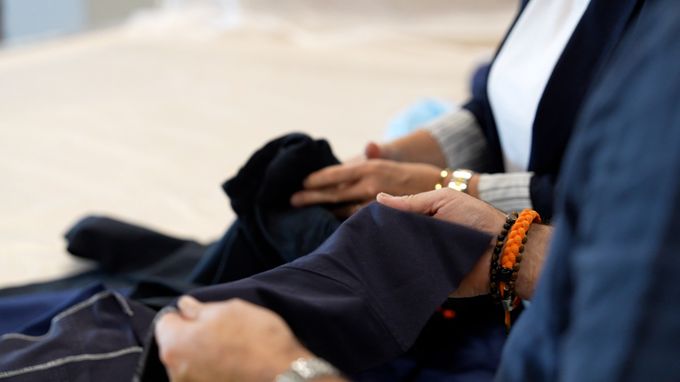
Good performance comes from looking at fabric, stretch technology, garment construction and finishes together rather than expecting one material choice to do all the work.
Polycotton blends and stretch technology
Polycotton remains widely used in UK healthcare uniforms because the blend can be developed around wash performance, comfort and dimensional stability. But the polyester-to-cotton ratio only tells part of the story. Yarn construction and fabric technology can make a significant difference to how the finished garment performs. ALSIFLEX®, for example, provides permanent stretch and shape recovery without elastane or elastolefin fibres. Removing those stretch fibres also makes the fabric easier to recycle as a conventional polyester/cotton blend at the end of its useful life.
For roles where contact with blood and bodily fluids is more likely, such as A&E, emergency response and some acute or specialist settings, you may need fabrics or finishes designed around higher cleanability and wash performance. The specification should reflect the contamination risk, laundering regime, wear pattern and IPC requirements rather than relying on fibre ratio alone.
Construction details
Fabric specification gets much of the attention, but construction also affects how well a garment holds up over its full life. The details to consider include:
- Twin-needle or chain-stitched seams at stress points (shoulders, side seams, gussets) rather than single-needle lockstitch
- Bar-tacked pocket corners and slit openings
- Reinforced or bound necklines
- Fade-resistant threads matched to the fabric dye class
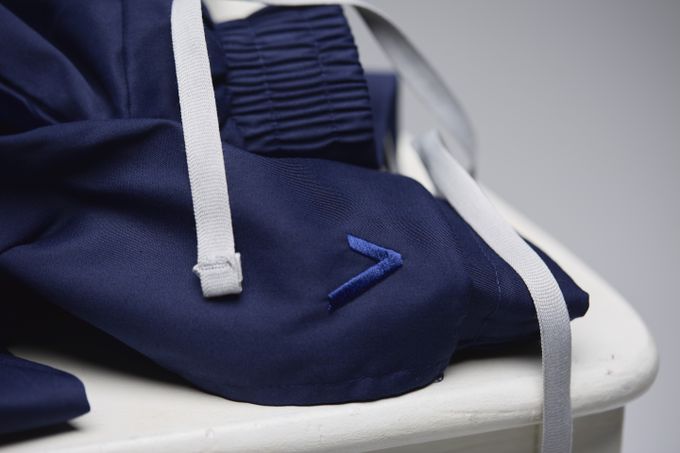
- Trims (poppers, zips, twill tape) rated for repeated hot washing without failure or discolouration
Fabric choice and garment construction need to work together. A fabric that performs well through repeated laundering can still be let down if the seams, trims or reinforcement aren’t suited to the garment’s wear pattern and wash regime. That’s why construction details should be assessed as part of whole-garment testing rather than treated separately from the fabric specification.
Finishes and what they cost over time
Soil-release, antimicrobial and fluid-repellent finishes can lose performance through repeated laundering. If you're specifying a finish, ask for test results showing its performance after a representative number of wash cycles rather than only on new cloth. Your specification should also account for whether the finish is expected to perform for the full life of the garment.
Where IPC guidance shapes the specification
Infection prevention and control isn't only about wash temperature and change frequency. Garment design counts too. Features that support IPC often also support garment life: fabrics that release soil readily, construction with fewer areas where soiling can collect and materials that tolerate repeated hot washing.
Look particularly at wash tolerance, soil release, construction and how those properties hold up after repeated laundering.
First, the fabric needs to tolerate the wash regime required by IPC guidance. A garment that can only be washed at 40°C to preserve fit or finish may not suit a setting where 60°C laundering is required. For cotton-blend healthcare workwear, 60°C is the practical baseline under NHS infection-prevention guidance.
Soil-release performance matters too. Fabrics and finishes that release soiling readily can reduce residue left after washing. Where contamination risk is higher, specify the level of after-wash performance you need and how long any finish must retain it.
Finally, look at collection points. Recessed pockets, secure pocket construction, minimal external decoration and clean neckline and cuff finishes can reduce areas where contaminants collect.
Match the specification to the garment type
The right balance is different for healthcare scrubs, tunics, trousers, and healthcare assistant uniforms because the wear pattern and the wash exposure differ. If you specify all of these as a single category, you're sitting on most of the avoidable cost in healthcare workwear procurement.
Scrubs, tunics, trousers and healthcare assistant uniforms


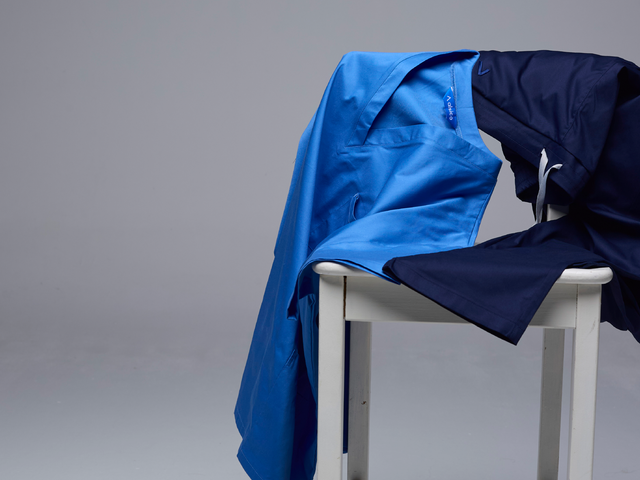

Healthcare assistant uniforms
Healthcare assistant uniforms need to cope with a particularly broad range of tasks. A shift may involve repositioning patients, supporting transfers, bathing and dressing, food service, cleaning and stocking. That puts repeated demands on areas such as the shoulders, hips, pockets and seams, while the garment also needs to cope with frequent soiling and laundering. Your specification needs to allow for this. Strong construction is especially important here, and the comfort spec needs to allow for high movement and frequent bending and reaching. Stretch fabri
Specifying durable healthcare uniforms at scale
If you're at an NHS trust or large care group, specifying durable healthcare uniforms isn't only about choosing the right fabric. It's about writing a specification the supplier can hold to over a multi-year contract and that survives the operational churn stemming from new sites, changing staff mix, evolving IPC expectations.
A serviceable specification should consider:
- Fabric composition and weight, with tolerance bands
- Wash performance at a defined cycle count, with tensile strength, colour fastness, and dimensional change all reported
- Construction details by garment area, not just a general reference
- Trim specification with hot-wash tolerance and colour-fastness ratings
- Finish performance after wash, where finishes are required
- IPC-relevant features specified explicitly rather than implied
- Sizing range and fit grading methodology
Where you leave any of these vague, the supplier has room to value-engineer the garment in ways that don't show up until well into your contract. The cost of doing it properly at specification stage is small relative to replacing a fleet of uniforms for hospitals or care homes that didn't perform.

The procurement decision worth reframing
Durability and comfort are both outcomes of the specification. Fibre and yarn construction, fabric technology, garment design, finishes, IPC requirements and the needs of each role all shape how a uniform performs across its working life.
A detailed specification gives your supplier a clear standard to work to across daily wear, repeated laundering and the life of the contract. Alsico is an awarded supplier on the NHS Healthcare Uniform Framework, supporting NHS organisations with uniforms developed around the needs of healthcare staff and the demands of clinical work.
contact
Request more information
You might also want to read

Healthcare workwear: balancing durability and comfort in high-wash environments
Read more

Care home uniforms: the link between appearance and perceived quality of care
Read more