
27 July 2026
The role of uniform in wider ESG strategies for care home groups
ESG (environmental, social, and governance) has moved firmly onto the agenda for most healthcare organisations, including large care home groups. This means investors, your workforce, and CQC inspection frameworks are now expecting you to demonstrate that sustainability and ethical practice are embedded in your care home operations.
However, uniforms rarely feature in the opening chapters of an ESG strategy. But for care home groups employing hundreds or thousands of staff across multiple sites, care home uniform decisions touch all three ESG pillars in ways that are both material and measurable.
The fabrics specified carry an environmental footprint; the design choices and consultation processes carry a social one; the supplier relationships, policies, and audit trails behind them carry a governance one. Read on as we discuss the role that uniforms can play in ESG strategies for care homes.
The importance of ESG in care homes
When it comes to ESG, healthcare organisations – including care home groups – are beginning to face increasingly high expectations from commissioners, local authorities, and private equity or institutional investors. This is because their own ESG commitments extend to their portfolio companies. Not to mention, the CQC has also incorporated sustainability into its assessment framework.
The CQC now requires care providers to demonstrate that leaders are taking active steps to embed net zero principles into planning and service delivery. For care home groups operating at scale or across multiple sites, it means sustainability considerations need to reach into procurement decisions, including the specification and sourcing of your carers uniforms.
At the same time, the workforce dimension of ESG has become more prominent. Care sector recruitment remains extremely competitive, and prospective staff could factor in your group's values and practices when choosing where to work. If your organisation can demonstrate coherent values in care homes – through how it treats its people, manages its supply chain, and takes responsibility for its environmental impact – it can be better positioned in that market.

The environmental pillar
If your care home group procures hundreds, or even thousands, of care worker uniforms, the environmental decisions embedded in that contract are significant. The choice of fabric and the expected garment lifespan are important, as is the approach to end-of-life disposal and laundering requirements.

Fabric sourcing and production footprint
Traditional uniform fabrics are typically polyester-cotton blends. They are functional and durable, but their production is energy and water-intensive, not forgetting that conventional polyester is derived from petroleum.
Organic cotton, grown without synthetic pesticides or fertilisers, is one option for garments where breathability and skin comfort are the priority. Alsico is also a member of the Better Cotton Initiative (BCI), supporting improvements in cotton farming and the use of BCI Cotton as part of its preferred-fibre approach. Other alternatives available to care home procurement teams include GRS-certified recycled polyester, made from post-consumer waste, and bio-based polyester, derived from renewable plant sources.
If your group is building an ESG reporting narrative, the ability to point to recognised standards and sourcing schemes in the uniform specification gives you clearer evidence to support your environmental reporting.

Garment longevity and textile waste
Textile waste is one of the more significant environmental costs in care home uniform management, and it is directly connected to procurement decisions. Lower-cost carers uniforms typically degrade quickly through repeated washing. This leads to more frequent replacement cycles, more waste, and a higher total environmental cost over time. Once replacement cycles are accounted for, you're also looking at a higher total financial cost.
If you start specifying higher-quality care home uniforms, you can reduce replacement frequency and extend the usable life of each garment. This is because the fabrics and construction are designed to withstand frequent high-temperature washing. For large care home groups managing thousands of staff across multiple sites, even a modest improvement in average garment lifespan has a measurable impact on the volume of textile waste generated annually.

End-of-life and uniform take-back
The point at which uniforms are retired is something many organisations never focused on before. But without a structured take-back or recycling programme, retired carers' uniforms typically go directly to landfill.
Alsico’s arx initiative brings its care, repair, rework and recycling programmes together, including garment collection for clothing that has reached the end of its usable life.
If you consider your care home group to be progressive, you should be asking uniform suppliers what the end-of-life options are. Can garments be returned to be repurposed or recycled into new fibres? These types of commitments need to be built into your procurement contracts. Suppliers who cannot answer these questions are likely not in a position to support a serious environmental strategy.
The social pillar
Another vital aspect of ESG in healthcare is the social dimension. This encompasses how an organisation treats its people, its communities, and its supply chain. For care home groups, this is where uniform decisions have the most immediate and visible impact.

Staff wellbeing and inclusive design
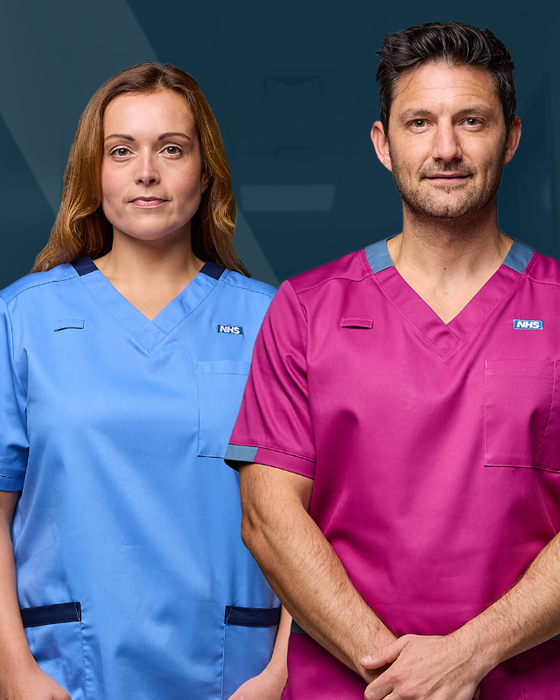
A care worker uniform that is uncomfortable, ill-fitting, or unsuited to the physical demands of the role is not a neutral procurement outcome. It actively affects performance and wellbeing. Alsico's 2025 research conducted with Care England found that more than half of care workers say the fit of their uniform affects their ability to carry out their duties effectively.
Garments that account for varied body shapes, different life stages, gender-neutral fit options, and cultural requirements are increasingly recognised as a baseline standard. The BSI's BS 30417 standard for inclusive PPE has formalised expectations in this area. For care home groups operating large, diverse workforces, meeting those expectations is both a staff welfare obligation and a reputational one. If your organisation fails to consult staff on uniform design, it could face legitimate challenges on the social pillar of ESG reporting.
Alsico's research also found that one in five care workers felt they had not been involved in uniform selection at all. For a sector where workforce retention is a persistent operational pressure, that is a meaningful gap. A more deliberate, inclusive approach to care home uniform procurement can close that.

Supply chain ethics
The social pillar of ESG extends beyond an organisation's own employees to the people involved in producing the goods it procures. If your care home group is reviewing their supply chain commitments, don't overlook uniform manufacturing. Garments produced without transparency into labour conditions, fair pay, or safe working environments create ESG exposure regardless of how well-designed they are.
Your procurement teams should be asking uniform suppliers directly about their manufacturing standards:
- Are factories audited
- What certifications are held
- How are conditions monitored
If your suppliers hold ISO certifications, have transparent supply chain reporting, and manufacture in regions with good labour protections, they are better positioned to support credible ESG claims.
The governance pillar
Governance, or how an organisation makes decisions, manages risk, and demonstrates accountability, is the pillar that holds the other two together. For care home groups, the governance dimension of uniform ESG is primarily about three things:
- Having a clear policy
- Choosing suppliers who can evidence their own commitments
- Maintaining the documentation to support any claims made in ESG reporting
Your uniform policy should reference fabric standards, inclusive design requirements, end-of-life arrangements, and supplier audit expectations. Building it as part of the uniform procurement process is a sign of the seriousness of the commitment. It also creates an external audit trail that commissioners, investors, and regulators can examine.
Supplier due diligence is important because ESG claims made by a care home group are only as credible as the supply chain behind them. If your group specifies sustainable carers uniforms but cannot evidence what that means, your claims are suspect. Evidence would include what certifications apply, what audits have been completed, and what reporting is available. Governance compliance of a uniform supplier is not complicated. It only requires transparency, documentation, and a clear willingness to participate in your group's own reporting processes.
Care home uniform as an ESG reporting asset
One of the challenges for care home groups building ESG reports is finding commitments that are concrete, measurable, and clearly within operational control. Uniform is one of them. The environmental footprint of the garments procured, the percentage of staff involved in uniform consultation, the inclusive design standards applied, and the end-of-life arrangements in place are all reportable data points. You can see how Alsico reports on its own environmental, social, and governance progress in our latest ESG report.
If your group is early in the ESG journey, a well-structured care home uniform policy is a meaningful and defensible contribution. It is also, critically, something your procurement teams can implement without needing a significant capital investment or disrupting the organisation.
The connection between values in care homes and how staff are equipped to deliver care is expressed every day in what care workers wear, how those garments are made, and how decisions about them are reached.
Alsico: care home uniforms that support your ESG goals
What a large care home group needs is a supplier that brings certified sustainable materials, inclusive design capability, transparent supply chain reporting, end-of-life programmes, and the capacity to supply consistently at scale.
Alsico's care home uniform range is designed to meet exactly those requirements, combining durable, performance-led fabrics with the inclusive design standards that a diverse care workforce demands. We also have a fully-owned supply chain, are committed to our net zero+ sustainability goals – including developing fully circular workwear and other innovative sustainable fabrics – and pay all of our staff around the world more than the living wage needed.
To find out how Alsico can support your care home group with uniforms that deliver on comfort, compliance, and your wider ESG commitments, get in touch with our team or explore our range of uniforms for healthcare providers.
Contact form
You might also want to read

Healthcare workwear: balancing durability and comfort in high-wash environments
Read more

Care home uniforms: the link between appearance and perceived quality of care
Read more